
The Hidden Cost of Hydraulic Hose Downtime
Ask most operations managers whether they're running an integration project and you'll get a flat no. Integration projects belong to IT. They come with consultants, Gantt charts and a budget line that makes the GM wince.
Now watch what actually happens on site when a hose lets go and a machine goes down.
Someone rings around to find out who has the part. Someone else reads a hose number off a crusty tag, gets half of it wrong, and rings back. A supervisor writes the job up on paper, and later someone in the office types it into another system. Days after that, a third person works out which machine the hose came off, what it cost and whether to reorder it.
Every one of those steps is integration work. It's the job of moving information from one place to another so the next person can act on it. Software normally does that job. On most sites, people do it, by phone, by clipboard and by memory.
So you are already running an integration project. You just don't call it one, and you never gave it a budget. And every hour it takes is another hour of downtime.
Add up the hours on Hydraulic Downtime
The manual version of integration is invisible because it's spread thinly across everyone. Twenty minutes on the phone here, half an hour re-keying a job card there. Nobody's timesheet says "integration".
Try a rough count for your own site. Take the hose and fitting jobs you do in a typical week. For each one, estimate the time spent on work that isn't fitting the hose:
- Chasing the part, the price or the person who knows the part number
- Identifying the assembly when the tag is worn or missing
- Writing the job up, then entering it again somewhere else
- Matching the job to the right asset and cost centre
- Working out what was used and what needs reordering
If that comes to even an hour per job, multiply it by your weekly job count and your loaded labour rate. That's a recurring cost you pay every week and never bill to anyone. It doesn't show up as a line item. It shows up as overtime, slow turnaround and a backlog that never quite clears.
The point isn't the exact number. The point is that the number exists, and you're already paying it.
The hidden cost is in the handoffs
Follow one hose failure from start to finish and count how many times the job changes hands.
- The operator notices the leak and stops the machine.
- The operator radios or calls the supervisor.
- The supervisor calls for the service truck.
- Everyone waits for the truck to arrive.
- The fitter identifies the hose, often from a damaged tag or the old assembly.
- The fitter makes up or sources the hose and fits it.
- The job is written up on paper or in a separate app.
- The office re-enters the job and raises an invoice or cost allocation.
- Someone later notices stock is low and places a reorder.
That's nine steps and at least six handoffs. Every handoff carries a delay, and every delay has a machine sitting idle behind it. Worse, the most useful information (which hose, which asset, why it failed) gets captured last, by the person furthest from the repair.
Now run the same failure with a BOApod on site and a BOAhub job card.
- The operator notices the leak and stops the machine.
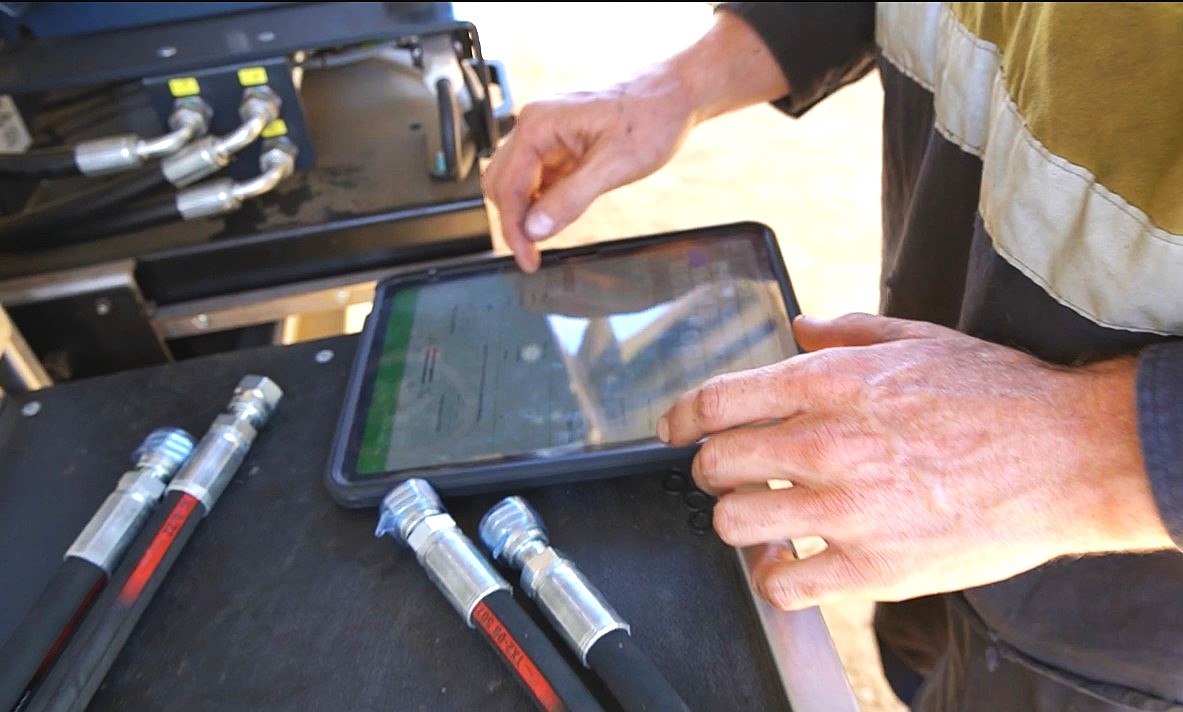
- The fitter scans or looks up the assembly in BOAhub, which already knows which hose goes on which machine.
- The fitter makes the hose in the BOApod from stock on hand, using the crimp specs held in BOAhub.
- The fitter fits it and closes the job card on the spot, with the asset, parts and time attached.
Four steps. No waiting for a truck, no re-keying, and the data is captured at the point of repair, by the person who did the work. Invoicing and reordering run off a job card that's already complete.
Five suppliers, zero accountability
Most sites didn't design their hose setup. It grew. Hoses from one supplier, fittings from another, a crimper bought years ago, a maintenance app chosen by someone who has since moved on, and training that happened once, informally, on the job.
Each of those suppliers may be good at what they do. The trouble is the gaps between them. When a crimped assembly fails early, is it the hose, the fitting, the die setting, the data or the person who made it? Each party can reasonably point to the next, and the site is left owning the outcome alone.
That's the real cost of a fragmented setup. Not bad products, but nobody responsible for the whole result.
BOA's approach is to be one partner that trains your people, equips the site and backs the whole system: the hose and fittings, the BOApod, the crimper setup, BOAhub and the people who support it. When something isn't right, there's one number to call and one team that owns the answer.
.jpg "The Hidden Cost of Hydraulic Hose Downtime")
Integration is a people problem first
Tools don't integrate themselves. A job card system only joins things up if crews actually close job cards. A container workshop only cuts downtime if fitters are confident making assemblies in it.
That's why training sits inside the BOA system rather than beside it. Crews learn to make, test and record assemblies the same way, every time. The BOAhub Specialist team works with sites to set the system up around how they really operate, and stays involved as crews change and the fleet grows.
The result is a system people use on a wet Tuesday night shift, not just in the demo.
What "plug and play" should actually mean
"Plug and play" gets used loosely. On a site, it should mean you turn the key and you're in business.
- The BOApod arrives stocked with the hose and fittings your fleet runs on.
- The crimper is set up and ready to use.
- The die sizes and crimp specs are already loaded in BOAhub.
- Your assemblies are tagged to your assets, so the system knows which hose goes on which machine.
That's day-one capability. No six-month rollout, no data-migration project, no waiting for the system to "bed in" before it earns its keep.
For larger fleets: your ERP shouldn't have to understand hydraulics
On big fleets and mine sites, the word "integration" makes IT nervous, and with good reason. Two-way syncs between field tools and the ERP are expensive to build and fragile to keep running.
BOAhub Enterprise takes a simpler line. BOAhub is the field system of record: assets, assemblies, job cards, and hose history live there. The ERP stays the finance system. BOAhub pushes clean, complete job cards and draft purchase orders across, so there's no messy two-way sync to maintain.
Everyone gets what they need:
- Finance gets SKU-level data against the right assets and cost centres.
- The field gets a fast workflow built for hose work, not a finance screen.
- IT gets a light load: one clean outbound flow instead of another integration project.
Stop owning the complexity
For owners and GMs, the instinct when something isn't working is to add visibility: another app, another report, another dashboard. But every system you bolt on adds its own admin, and someone has to keep it joined to everything else. More dashboards rarely mean more control.
Control comes from fewer moving parts. When the BOApod, BOAhub, hose and fittings supply and crew training are designed as one system, the joins disappear. There's nothing to chase, nothing to re-key and no gap for a job to fall into.
You stop paying people to be the integration layer, and you get back the hours you were never billing for.
That's what we mean by enjoy the freedom of total control.